The group Psoas Major, Psoas Minor, Iliacus is another great unknown universe of our muscles, and as all beings who feel wrongly ignored, it often exacts bitter payment for this affront.

The Subscapularis is one of the most ignored external muscles of our body. But every good practitioner of trigger point therapy would do well to make friendship with this stranger.

The Subscapularis is placed between the inner face of the Scapula and the thoracic vertebrae, and is hidden by the shoulder blade and this explains why most people do not even know of its existence.

The Pectoralis Major is a muscle well loved by those who are into fitness, but is also a complex and convoluted muscle, much abused and often hypertonic.

The anatomy of the muscle is actually more complex than it first appears because the Pectoralis Major is a structure consisting of sheets, similar to a fan- positioned deck of cards, wrapped around the origin at the armpit.

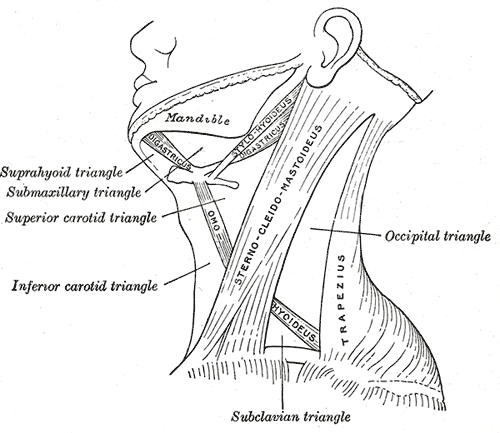
The syndrome caused by trigger points in the Sternocleidomastoids can give rise to the most varied diagnoses, as trigger points in the Sternocleidomastoid muscles are a cause of problems not only of pain and motor nature, but also proprioceptive and systemic nature.

The Sternocleidomastoid lends itself to some of the most interesting myofascial syndromes and is a prime example of how trigger points can sometimes give rise to the most multifarious misdiagnoses.

The muscle, as its name tells us, consists of two divisions, one external and anterior that inserts at the Sternum and Clavicle, and the other, posterior and internal that attaches to the Clavicle. The common origin of the muscle is in the Mastoid process.

One of the perpetuating factors in myofascial syndromes that is often underestimated, is the deficiency of some vitamins and minerals.

Often, in order to achieve a lasting remission of the problems related to trigger points, manual therapy alone is not sufficient, but one must eliminate all perpetuating factors as well. In this article I will focus on the very important category of perpetuating factors constituted by inadequate nutrition.

The trigger points of the Pectoralis Major can cause extremely alarming misdiagnoses, especially when they simulate severe heart problems.

In addition, there are somatovisceral effects which consist of somatic-muscular reflections of visceral syndromes. In such cases, the trigger points of the Pectoralis Major can: not exclude, co-exist or be a consequence of cardiac syndromes.

It is therefore always importat to rule out conditions that give similar symptoms, including Angina Pectoris.

As a youth, I was very athletic. Then, when I was about 35, I became overburdened with work and family obligations, and so I let myself go a bit.

On the occasion of my fortieth birthday though, I looked at myself in the mirror, and noticing with horror the belly that had transformed my outline, I promised myself I would return to running regularly the way I used to do when I was twenty.

So I managed to get a pair of very expensive running shoes as a gift, and the following day, early in the morning, I gulped a cup of coffe and out I went, running on the street.

So called Golfer's Elbow, or medial epicondylitis, is an inflammation of the tendineous insertion of the inner elbow that involves the flexors of the forearm.

The best, and perhaps only true, way to learn to treat trigger points thoroughly is by starting with one's own muscles.

Trigger point self-massage, besides self-healing, allows to deepen the technical expertise in an unmatched fashion, but also to appreciate the exquisite sensations that are triggered, so that a therapist grows to a subsequent compassion towards future patients!

Tags: 

Pages